
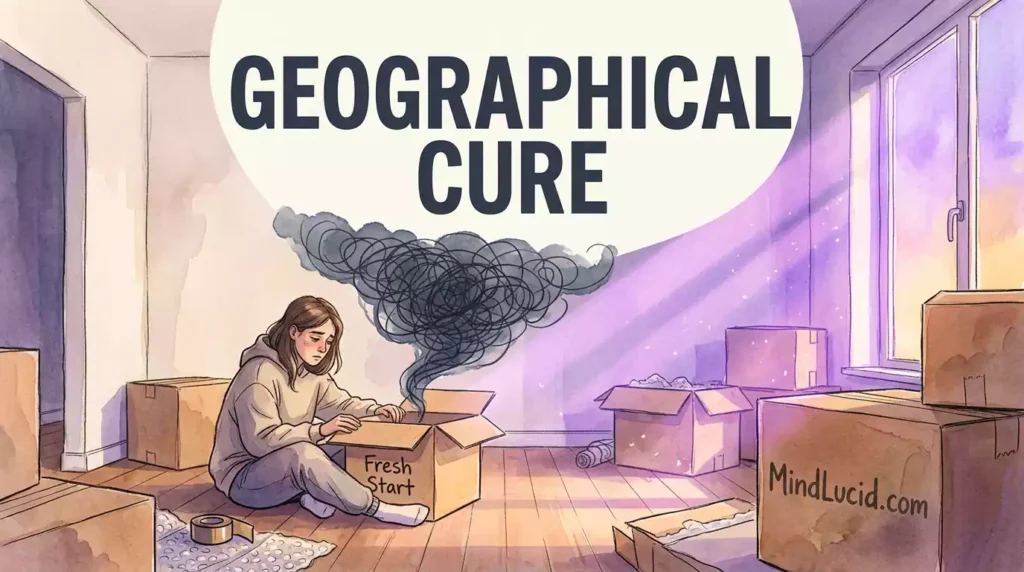
Have you ever found yourself staring blankly at your laptop screen, surrounded by half-finished projects, unwashed coffee mugs, and an ever-growing list of obligations, and suddenly thought: “If I just moved to a different city, everything would be so much better”? You are absolutely not alone in this feeling. This profound, overwhelming desire to pack up your entire life, leave your current surroundings behind, and start completely fresh somewhere else is a universal human fantasy, but it is especially pronounced in those navigating the unique complexities of neurodivergent brains. We often manage to convince ourselves that our physical environment is the sole anchor holding us down, the primary source of our daily friction. We genuinely believe that a new city, a new apartment, or a different climate will magically wipe away the mental clutter, eliminate the perpetual procrastination, and instantly clear the persistent brain fog that makes everyday tasks feel like wading through molasses. In the realms of psychology and personal development, this powerful phenomenon is commonly referred to as the geographical cure. It is the belief that changing your geography will inherently change your internal reality.
But before you start eagerly browsing real estate listings, obsessively checking out new neighborhoods online, or ordering a mountain of moving boxes, it is absolutely essential to pause and understand why changing your zip code is rarely the ultimate panacea it appears to be. While a change of scenery can undoubtedly be invigorating and offer a temporary burst of energy, relying on the geographical cure to permanently fix internal, neurologically-based challenges like severe brain fog and executive dysfunction is almost always a recipe for long-term disappointment. Today, we are going to dive deep into exactly why this phenomenon is so intensely alluring, how the unique wiring of an attention-variable brain processes these massive environmental changes, and what highly effective, alternative strategies you can implement right now to truly lift the fog—without having to hire a moving company.
The Psychology Behind the Geographical Cure
The term “geographical cure” originally gained prominence within addiction recovery circles. It described the common, yet ultimately flawed, tendency of individuals to relocate to a new town or state under the assumption that a fresh environment would automatically cure their dependencies and sever their ties to destructive habits. Over time, however, mental health professionals and life coaches realized that this concept applies brilliantly to a much broader spectrum of human behavior, particularly for individuals struggling with executive functioning challenges, burnout, and chronic mental fatigue. When you are drowning in brain fog—that pervasive sense of cognitive sluggishness where concentrating feels impossible and your short-term memory seems to have evaporated—your brain desperately seeks an escape hatch. The geographical cure presents itself as the ultimate reset button. It operates on the psychological illusion of the “blank slate.”
Your mind constructs a vividly detailed, utopian vision of your future self in this new location. In this fantasy, “New City You” effortlessly wakes up at 6:00 AM every morning feeling completely refreshed. “New City You” immediately goes for a serene morning jog, drinks a highly nutritious green smoothie, effortlessly organizes their workspace, never misplaces their keys, and most importantly, experiences zero brain fog.
The current environment becomes the scapegoat for every internal struggle. You look at your messy desk and think, “I can’t possibly focus in this cramped room; if I had a loft with floor-to-ceiling windows, my mind would be completely clear.” By externalizing the root cause of our struggles, we temporarily absolve ourselves of the difficult, unglamorous work of building internal systems. The geographical cure is incredibly seductive because it promises a total transformation with a single, albeit massive, external action: moving. However, this perfectly constructed fantasy completely ignores the fundamental reality of human cognition. Your brain, with all its beautiful complexities, its unique wiring, and its specific set of challenges, is the one thing you absolutely must pack and take with you.
The Neuroscience of Novelty and the Allure of the Fresh Start
To truly grasp why the geographical cure is so irresistible, especially if you struggle with focus and organization, we have to talk about dopamine. Dopamine is often simplified as the “reward” chemical, but it is more accurately described as the neurotransmitter of anticipation, motivation, and novelty. For brains that naturally run low on dopamine or process it differently, the everyday, repetitive routines of life can feel physically painful. Boredom isn’t just an inconvenience; it feels like an insurmountable wall of mental fog. This is where the sheer magnitude of a move comes into play. A major geographical move is the ultimate novelty generator. It is a massive, multifaceted project that requires intense planning, endless research, and constant decision-making.
From the moment you decide to move, your brain is flooded with a potent cocktail of dopamine and adrenaline. You hyper-focus on endlessly scrolling through apartment listings, researching local coffee shops in your prospective new neighborhood, and buying brand-new organizing bins for a home you don’t even live in yet. During this intense planning phase, you might actually feel incredibly energized. Your brain fog might temporarily lift. You suddenly have the motivation to stay up until 2:00 AM creating intricate spreadsheets detailing moving costs and packing schedules. This sudden burst of clarity and executive function serves as a false confirmation of your belief: “See? Just the thought of moving has cleared my head! The geographical cure is exactly what I need.”
However, what you are actually experiencing is not a permanent structural change in your cognitive functioning, but rather a temporary, chemically-induced high triggered by massive novelty. The anticipation of the “fresh start” creates an artificial scaffolding of motivation. It forces you to engage, to act, and to dream. But like any novelty-driven high, it has a strict expiration date. The tragedy of the geographical cure is that it mistakes the temporary dopamine spike of a major life transition for a permanent solution to a chronic, deeply ingrained processing style.
The Reality Check: Your Brain Fog Unpacks With You
Let us fast-forward to the reality of the situation. The moving truck has unloaded the last box, the adrenaline has finally subsided, and you are officially a resident of your dream city. For the first few weeks, the momentum of the geographical cure continues to carry you. Everything is exciting and new. Exploring a different grocery store, figuring out the best route to work, and discovering local parks provide enough micro-novelty to keep the brain fog at bay. This is often referred to as the “honeymoon phase” of relocation. But inevitably, a day comes—usually around the three to six-month mark—when the new city simply becomes… your current city.
The novelty wears off completely. The local coffee shop is no longer an exciting discovery; it is just the place you go to get caffeine. And this is the precise moment the illusion shatters. The brain fog, which you firmly believed you had left hundreds of miles behind, quietly unpacks its bags and settles right back into your mind. You find yourself staring blankly at your laptop screen in your beautiful new loft, experiencing the exact same paralysis you felt in your old, cramped apartment. The struggles with task initiation, the time blindness, the difficulty organizing your thoughts—they have all returned with a vengeance.
This realization can be incredibly jarring and deeply disheartening. In many cases, the brain fog can actually feel significantly worse in a new location. Why? Because you have stripped away whatever subtle, invisible support structures and deeply ingrained routines you had unconsciously built in your previous environment. In your old city, you might have had a specific body double you worked with, a familiar route that required zero cognitive effort to navigate, or a trusted local support network. Without these familiar anchors, your brain has to expend significantly more energy just to navigate daily survival, leading to an even faster depletion of cognitive resources and a much denser, heavier layer of brain fog.
The Geographical Cure: Expectation vs. Reality
| The Fantasy (Expectation) | The Reality (Post-Move) |
|---|---|
| Instant Clarity: Waking up refreshed and ready to tackle the day with zero brain fog. | Familiar Fog: Morning grogginess and task paralysis return once the novelty wears off. |
| Effortless Organization: A new, aesthetic space will naturally make me a highly organized person. | Cluttered Chaos: Without an externalized system, the new space becomes just as disorganized as the old one. |
| Boundless Motivation: The inspiring new environment will permanently cure my procrastination. | Dopamine Drop: The initial adrenaline spike plummets, leaving you depleted and lacking internal motivation. |
| Perfect Routines: I will automatically adopt healthy habits like daily exercise and meal prepping. | Executive Fatigue: Building new routines in an unfamiliar place actually requires more cognitive effort, not less. |
Decode Your Brain’s Need for Change
Are you constantly seeking the next big life change or a brand new environment just to feel like you can finally focus? Stop running from city to city and start understanding the intricate, fascinating ways your brain works. Taking the time to map out your cognitive patterns is the first real step toward lifting the fog permanently. Take our highly comprehensive, insightful self-assessment to discover your focus style today.
The Dopamine Drop and the Shame Spiral
When the geographical cure inevitably fails to deliver on its impossible promise of total personal transformation, it often triggers what is known as a shame spiral. You invested massive amounts of time, money, and emotional energy into this move. You likely told your friends, family, and colleagues that this relocation was going to be the fresh start you desperately needed. When you find yourself back in the familiar, frustrating grip of brain fog and executive dysfunction, the internal narrative turns intensely negative. “I changed everything, I live in my dream city, and I’m still struggling. Therefore, I must be fundamentally broken.”
This harsh self-judgment is deeply counterproductive, but it is an entirely understandable reaction. It is vital to reframe this moment not as a personal failure, but as a profound, enlightening realization. The failure of the geographical cure is actually incredibly valuable data. It definitively proves that your struggles are not merely a product of a boring environment or a restrictive zip code. It forces you to stop looking outward for magical solutions and encourages you to start looking inward to build sustainable, personalized strategies. Recognizing that your brain fog travels with you is the necessary prerequisite to finally addressing its actual roots: cognitive overload, lack of structured routines, mismatched environmental stimulation, or unmanaged executive function challenges.
Building Internal Architecture: Better Alternatives to Moving
So, if moving to a new city won’t permanently fix your brain fog, what actually will? The answer lies in building robust internal architecture and making intentional, targeted micro-changes to your immediate environment, rather than overhauling your entire geography. Here are several highly effective, actionable alternatives to the geographical cure that you can begin implementing today.
1. Master the Art of Micro-Novelty
Your brain naturally craves novelty to generate dopamine, which helps pierce through the thickest mental fog. But you do not need to move to a new state to get this vital stimulation. Instead, intentionally introduce micro-novelty into your daily existence. Rearrange the furniture in your home office completely. Change the layout of your digital workspace, update your desktop background, or switch to a new, aesthetically pleasing productivity app. Work from a different local library or café twice a week. Try taking a completely different, slightly longer route during your morning walk. These small, manageable injections of newness provide the brain with a healthy dose of stimulation without the exhausting cognitive toll of a massive life upheaval.
2. Create a Personalized “Dopamine Menu”
When brain fog descends heavily, your ability to think of healthy, stimulating activities plummets. You might default to doom-scrolling on social media, which only thickens the fog and wastes time. To combat this paralysis, create a personalized “dopamine menu”—a physical, highly visible list of activities that naturally boost your mood and energy. Categorize them logically:
- Appetizers: Quick, 5-minute fixes like doing 10 jumping jacks, stretching, or listening to an upbeat, high-energy song.
- Entrees: Longer, more immersive activities like a 30-minute creative hobby, reading a chapter of an engaging book, or taking a brisk walk in nature.
- Desserts: Indulgences to be used sparingly, like watching an episode of your favorite show or eating a favorite treat.
When the fog rolls in, you do not have to expend energy trying to think of what to do; you simply look at the menu, pick an item, and execute it.
3. Externalize Your Executive Function
Brain fog is frequently the direct, unavoidable result of severe cognitive overload. You are trying to hold too much information, too many deadlines, and too many fleeting ideas in your fragile working memory all at once. The solution is to mercilessly externalize your executive functioning. Do not rely on your brain to remember anything important. Use large, highly visible whiteboards for your daily tasks. Set auditory alarms and visual timers for transitions between tasks. Implement color-coded visual systems in your physical space so that putting things away requires zero conscious thought. By shifting the heavy burden of memory and organization from your internal cognitive load to your external physical environment, you free up massive amounts of mental bandwidth, significantly reducing the density of your brain fog.
4. Optimize Your Sensory Environment
Sometimes, what feels like an uncontrollable, urgent need for a geographical cure is actually profound sensory overwhelm or sensory under-stimulation in your current, immediate space. Take a critical, highly objective look at your surroundings. Is the overhead lighting harsh, fluorescent, and headache-inducing? Are there constant, distracting background noises from traffic or neighbors? Is the space so visually cluttered that it instantly overwhelms you? Conversely, is your space so sterile, beige, and quiet that your brain feels severely under-stimulated and sluggish? Adjusting your sensory diet—using high-quality noise-canceling headphones, investing in warm, adjustable ambient lighting, playing bilateral stimulation music, or adding vibrant art to your walls—can dramatically alter your ability to focus, making your current geography feel infinitely more hospitable and functional.
Frequently Asked Questions
Is the desire to move a sign that something is fundamentally wrong with my life?
Not necessarily. The desire for a fresh start is a completely natural human impulse, especially during periods of high stress, creative stagnation, or burnout. It becomes problematic only when it is used as an avoidant coping mechanism—when you firmly believe the move itself will magically solve deeply ingrained internal cognitive challenges without requiring any deliberate behavioral changes or self-reflection on your part.
Can a geographical cure ever actually work?
A move can be highly beneficial and entirely justified if your current environment is genuinely toxic, unsafe, or fundamentally misaligned with your core life goals (for example, you thrive in nature but currently live in a dense, noisy concrete jungle). However, it works best when the relocation is a deliberate, proactive step towards a well-planned life, rather than a frantic, desperate escape from your own mental state. Even with a highly positive move, you must still proactively build internal systems to manage brain fog.
How can I tell if I genuinely need to relocate, or if I just need better coping strategies?
A highly effective psychological exercise is to vividly imagine yourself living in your absolute ideal new city. Now, imagine having the exact same lack of a structured routine, the exact same unmanaged, chaotic workload, and the exact same habits you have right now. Would you still be stressed, overwhelmed, and foggy? If the honest answer is yes, then your primary focus should be on developing better coping strategies and internal systems first. Build the strong internal structure now, and then you can objectively decide if you still want to change your scenery.
Conclusion
The powerful, deeply ingrained fantasy of the geographical cure is a beautiful, imaginative testament to your brain’s relentless desire for clarity, forward momentum, and peace. It is a blinking signal on your mental dashboard indicating that you are ready for a significant, meaningful change in your life. However, true, lasting clarity is almost never found simply by pointing to a new location on a map; it is meticulously and lovingly cultivated in your daily habits, your highly personalized systems, and your deep, compassionate understanding of exactly how your unique mind operates.
By recognizing the inherent limitations of merely changing your zip code to escape your struggles, you actively empower yourself to undertake the much more rewarding, sustainable journey of changing your internal landscape. You can absolutely lift the heavy, suffocating veil of brain fog, but the most effective, most transformative tools for doing so are already right there in your hands, regardless of where you currently call home. Start small, give yourself abundant grace during the learning process, and focus relentlessly on building an environment—both internal and external—that actively supports, nurtures, and celebrates your cognitive needs today. Your brain is your permanent residence; it is time to make it a beautiful, clear place to live.